Social Impact Assessment of the NEOTEC Programme
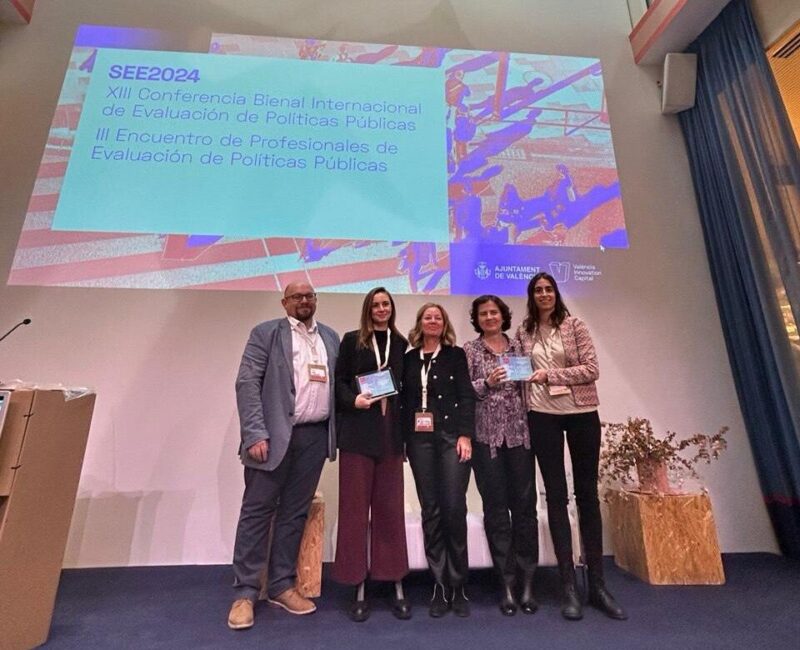
The «Social Impact Assessment of the NEOTEC Programme»has been recognized with two important awards: the Award for Innovation in Public Management, granted by the State Secretariat for the Civil Service, and the 5th «Carlos Román» International Prize», granted by the Spanish Evaluation Society. These awards highlight both the excellence as the impact The report highlights methodological innovations that allow for a more comprehensive evaluation of the effect of public R&D&I policies, going beyond technological and economic results, with a special emphasis on social impacts.
An ethical and participatory approach
One of the innovative aspects of this evaluation is its participatory methodology, which was developed within the framework of thehe European Pro-Ethics project. This approach has made it possible to involve a wide range of actors in the evaluation process, including CDTI managers, companies, entrepreneurship support centres, universities and regional agencies. By incorporating the perspectives of these actors, a more comprehensive view of the social impact of the programme has been achieved.
This participatory approach has made it possible not only to assess the immediate impacts of the programme, but also to identify areas for improvement in areas such as sustainability and social inclusion. Measuring social impact in the R&D&I sector is another innovative element of this evaluation. Through the integration of indicators aligned with the Sustainable Development Goals, the evaluation has provided valuable data on the impact of NEOTEC on issues such as the digital divide, accessibility to new technologies for vulnerable groups, adaptation to climate change and the circular economy.
Key findings of the evaluation
The «Social Impact Assessment of the NEOTEC programme» has revealed important findings. Although the programme has proved to be successful in terms of technology transfer y knowledge generation, The results in the market in the short and medium term have been more limited. Beneficiary companies have experienced higher growth in the short and medium term. R&D&I expenditure, patents y lines of research, but have had a more neutral impact in terms of sales and competitiveness in the short term due to the early nature of the projects.
However, the programme has demonstrated a high survival rate in the companies financed, which have created stable employment with a significant proportion of open-ended contracts. It has also been identified that the funding provided by NEOTEC has facilitated the access to other sources of funding, as Horizon 2020, This has boosted the growth and consolidation of the companies.
Final reflections
The social impact assessment of the NEOTEC programme has set a milestone in the way public R&D&I policies are evaluated in Spain by integrating participatory and ethical approaches, demonstrating the CDTI's ability to adapt the programme to contemporary social and economic challenges. The results obtained not only provide valuable information on the current impact of NEOTEC but also provide key recommendations to improve its effectiveness in the future.
If you want to know more about the Social Impact Assessment of the NEOTEC Programme, you can consult the full report available on the portal of the CDTI.


 Attribution-NonCommercial-ShareAlike