REFOCUS 2nd Multiplier Event: a space for sustainability and climate education
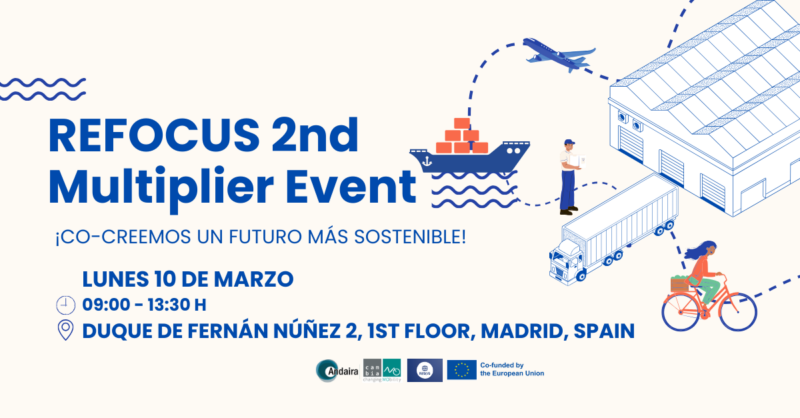
On 10 March last, the “REFOCUS 2nd Multiplier Event”.”, The day of exchange marked the closing of this project, in which, from Andaira, We have participated as part of the consortium and with very satisfactory results.
REFOCUS Project Erasmus + is a European initiative with a presence in four countries - Greece, the Netherlands, Belgium and Spain - that harnesses local and transnational communities to optimise the climate literacy y improving sustainability practices at university level.
The day was divided into two parts. The first part was a group dynamic on three key topics: Climate Literacy; Just Transition; and Barriers in the implementation of new curricula.
In this first round, the main emphasis was on the importance of more engaging climate change education, which should be integrated with emotional and mental health support to help students process the reality of the climate crisis and react to it.
Meanwhile, in the second part of the event, a round table discussion took place. “Just Transition: From reality to Academia”.”, moderated by Floridea Di Ciommo, director of changesMO, This roundtable was attended by:
- Carmen Duce Díaz, industrial engineer and national coordinator of Ecologists in Action
- Rosa M. de la Fuente Fernández, vice-rector for students at the Complutense University of Madrid
- Sinéad Magner, Coordinator of the Women and Gender working group of the UN Framework for a Just Transition to Climate Change
- Ioanna Pagoni, The project is being carried out by the Refocus project scientist and Impacts manager at SPINE.
In this space, each of the speakers shared their experience on the work carried out by their respective organisations and universities to contribute to climate literacy. In addition, they discussed the importance of including sustainability issues in academic curricula from a participatory approach aimed at both students and teachers.
Needs identified on the day
- It is essential to open up the debate beyond the concept of sustainability and generate a more holistic view on climate change and the environment to connect with young women.
- Universities should provide more holistic and comprehensive education on climate change, including its emotional and psychological impacts, so that students better understand the urgency and magnitude of the problem.
- Building a sense of community and collective action is essential to advance sustainability issues, prioritising collaboration over individual efforts.
- Provide mental health resources to help students manage anxiety and stress arising from the climate crisis and its implications for the future.
- Sustainable strategies should be designed considering the particularities of each university and its community, taking into account local resources, needs and specific conditions.
- It is key that students have opportunities to address sustainability issues in real contexts, through internships, projects or environmental initiatives where they can gain practical experience.
- Sustainability needs to be more deeply integrated into university curricula. Although political science currently has a relevant focus on this topic, it needs to be balanced with other disciplines to achieve a more holistic approach.
REFOCUS has developed training material for university students in the shipping, maritime transport and logistics sector, which has been tested in several training schools in Antewerp, Delft and Chios. This project has had a great impact on the creation of synergies in the field of education and training.


 Attribution-NonCommercial-ShareAlike